
When I moved to Sydney, I was new to city living and didn't know many people. So one Wednesday, I went along to the girls-only climbing night at BlocHaus.
I kept going for years. I met so many amazing women there. It became my excuse to catch up with friends, and somewhere to linger afterwards, getting a coffee and chatting long after we'd finished climbing. It was my third space. Not home, not work, but somewhere I belonged.
What most studio feeds miss
Now that I work with studios on their social media, I notice how rarely that feeling makes it onto their feeds. Most follow the same pattern. The timetable. The intro offer. A beautiful photo of an empty room.
None of it is wrong. It just shows the room, and the room was never the reason I kept coming back.
What the best studios figured out
I've been studying studios around the world whose social media I genuinely love, and four stand out. Two are in Australia and two are overseas. Three are bathhouses and one is a climbing gym.
What I keep noticing is that none of them are really selling a workout or a sauna session. They're selling who you get to be, and how it feels to belong somewhere. Each one shows a different way of doing it.
Sense of Self: build a world people want to enter
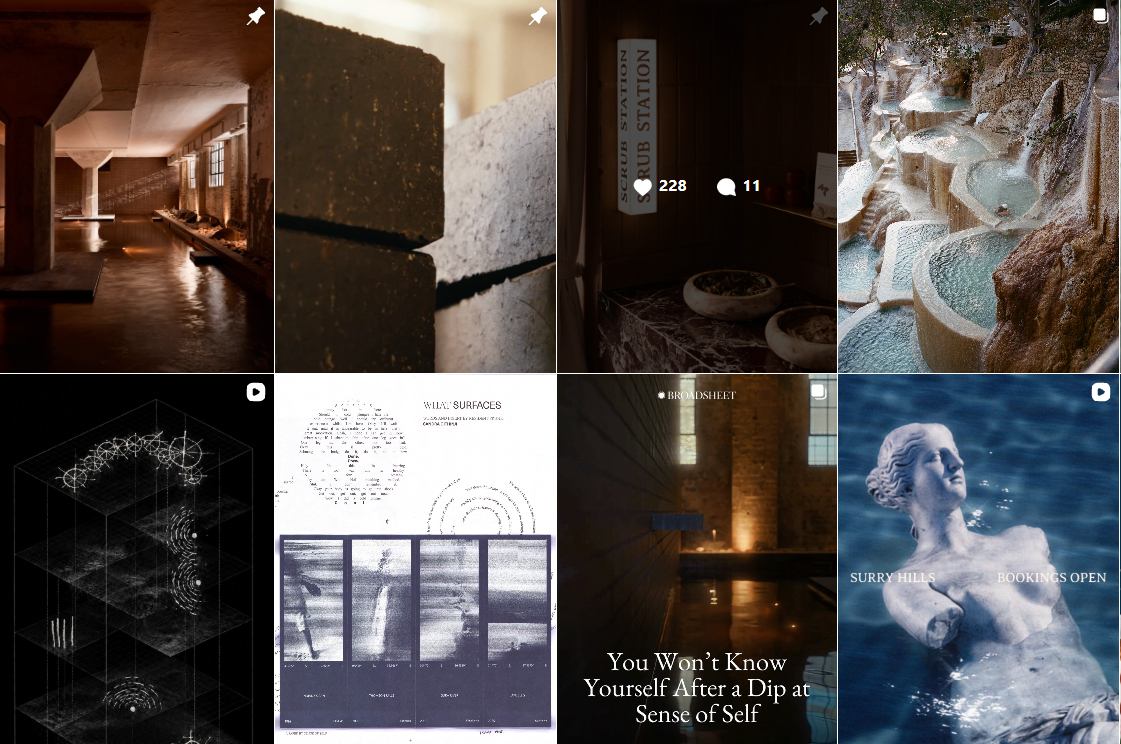
Sense of Self, or SOS, is a bathhouse in Collingwood and Surry Hills, and its feed feels more like a magazine about a place than a business account. Architecture, art, illustration, a classical statue underwater announcing Surry Hills bookings. Very few straight photos of the facilities.
Before Surry Hills opened, they ran a series called Building a Bathhouse. The architect, Jean-Paul, and the founder, Freya, talk through the smallest details, like how the floor feels underfoot and how light falls on the brickwork. The captions are signed off from "your friends at Sense Of Self", and Freya joins the comments herself.
They also host artists in residence, called Resident Prunes (as in pruney fingers), who respond creatively to the space. One was choreographer Aisha Kuryana, whose work features in The Dip, the bathhouse's own printed publication. Prunes, The Dip, bathers, the Scrub Station. SOS has a vocabulary nobody else could use.
What it shows: by the time the doors opened, followers had watched the place being made and met the people behind it. Nobody arrived as a stranger. They wanted to belong before they'd even been.
Othership: create the culture, then hold the door open
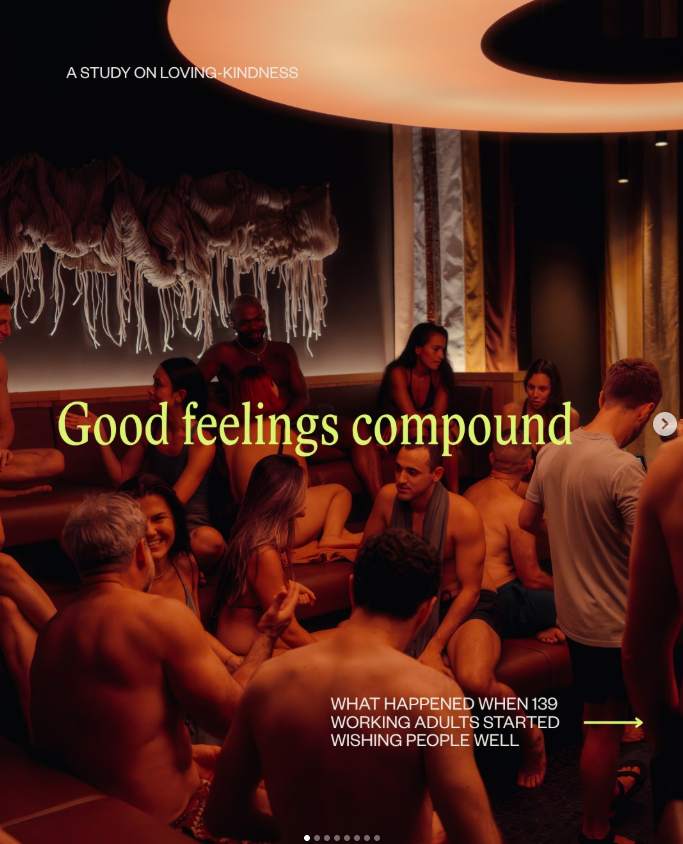
Othership is a social bathhouse in Toronto and New York, and it began before it had a building. Streets of Toronto and Fitt Insider have both told the story of the founder and friends using WhatsApp groups to gather around 30 people at a bathhouse each week, and running ice baths in backyards.
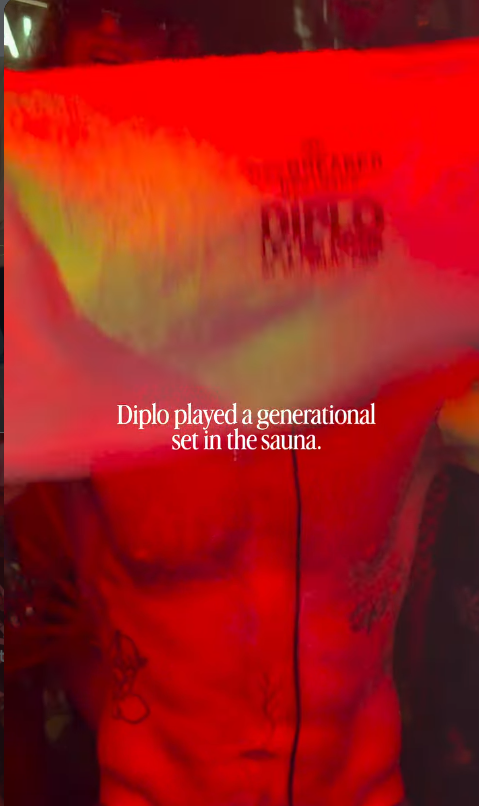
That instinct for gathering people is still at the heart of it. Recently, Daybreaker held a sauna rave at Othership in Brooklyn, with Diplo playing a set and DJ Lovers Club behind the music. It was filmed for social media and shared across all three accounts, picking up more than 1,700 likes in two days. One guest called it real social wellness.
The most-liked comment, though, came from a critic asking for people like this to be kept away from real saunas. I don't see that as a failure. Creating culture always draws a line between people who get it and people who don't, and that line is part of what makes members feel like insiders.
Here's the clever part. Pinned on their profile is a highlight called First Timer: a calm, empty sauna, the words "First time?", and a prompt to tap through for the FAQ. Someone who sees the rave, gets curious and visits the profile lands right next to it.
What it shows: the rave gives people a culture worth joining. The First Timer highlight shows them the way in.
Arvo Sauna: borrow belonging from communities that already exist
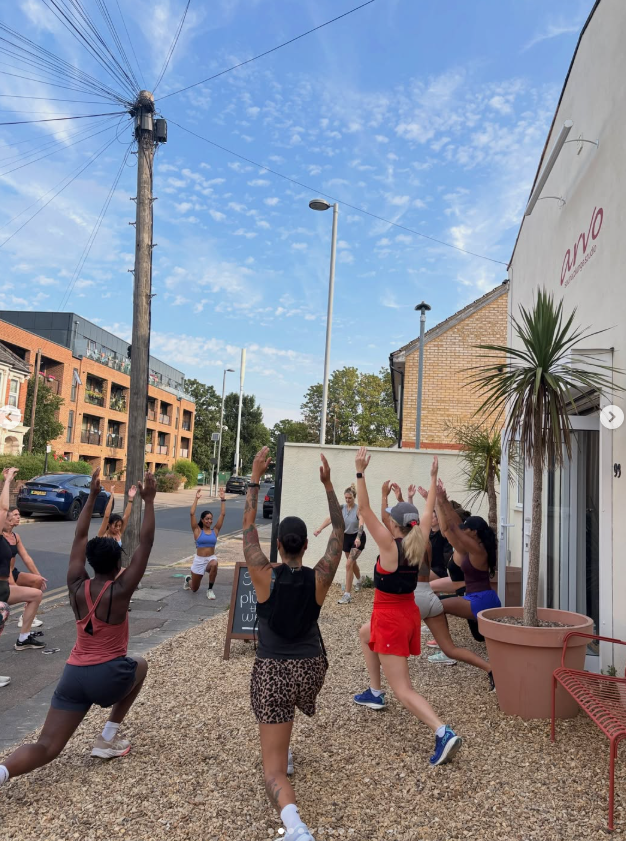
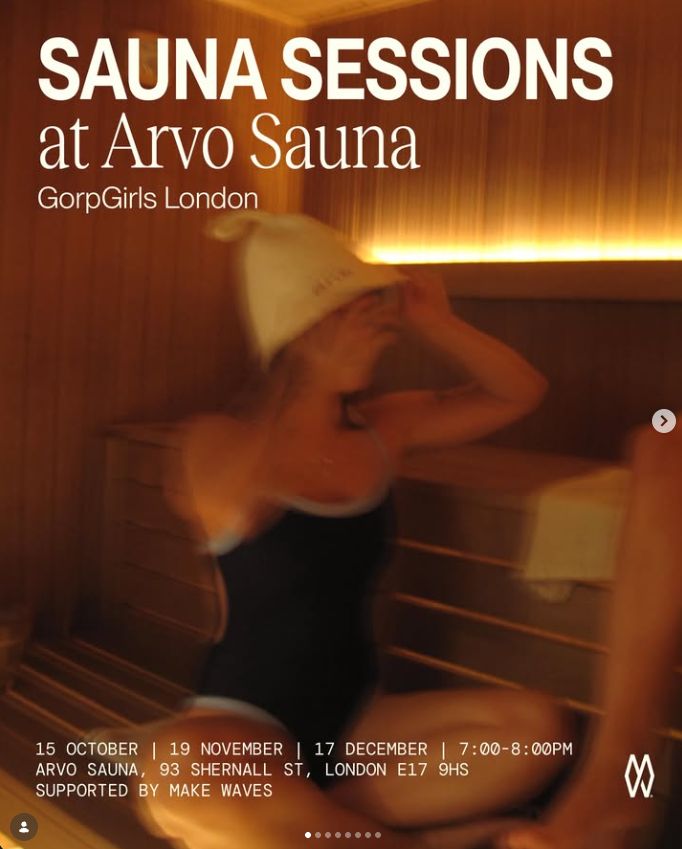
Arvo is a sauna and plunge studio in Walthamstow, East London, in a converted Italian restaurant on a quiet residential street. It's Australian-inspired (arvo, as in afternoon), and The Nudge noted it had a genuine neighbourhood feel within a month of opening.
A new sauna doesn't have a community yet. So Arvo partners with people who do.
GorpGirls, a London collective creating safe spaces for women outdoors, now runs a monthly Sauna Club at Arvo every third Thursday, supported by Make Waves. The invitation is all bodies, all paces, with a choice of social or silent sauna.
Arvo also runs its own monthly run club. Bag drop at 7pm, a social 5k led by running coach Simon, then goodies and an hour of sauna and plunge. Their first run had 7 people. The last two had 20. One commenter summed up the appeal: a 5k that ends in a sauna is the only cardio they'd consider.
What it shows: Arvo doesn't have to build its community from scratch. It gives existing communities a place to gather, and everyone who comes brings their own people with them.
BlocHaus: turn community into a habit
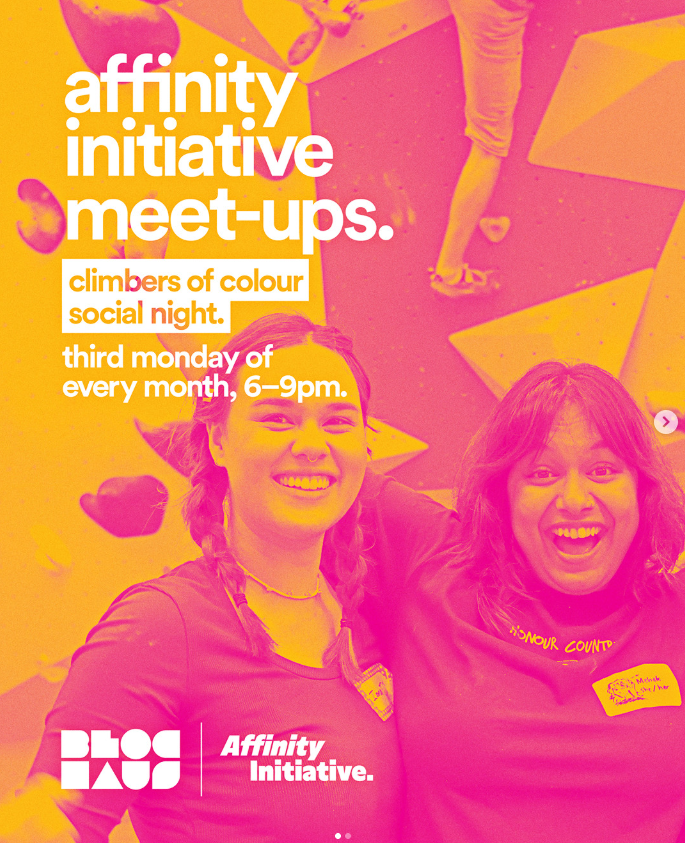
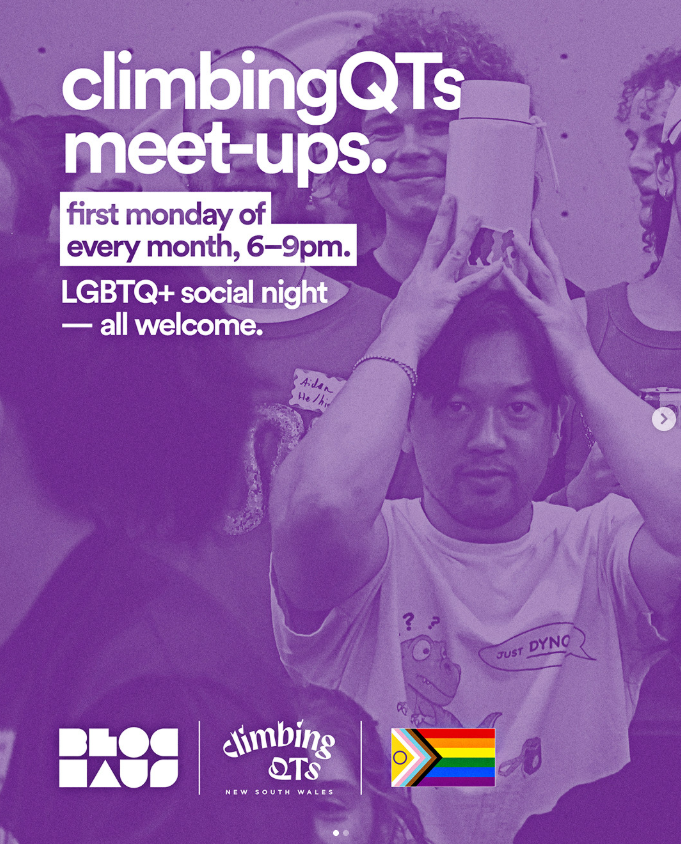
Which brings me back to BlocHaus, now in Marrickville and Leichhardt.
Their feed is a calendar of rituals. ClimbingQTs, an LGBTQ+ social night, on the first Monday of every month. A climbers of colour social night with the Affinity Initiative on the third Monday. Cheap Thrills socials every Saturday from 5pm. A team competition called the Boulder Ladder, and birthday parties for the gym itself. Even sector resets, when the setters change the climbs, are posted with a room full of people watching.
Every event caption spells out exactly who is welcome, members and non-members alike. Entry is kept low, with free shoe hire for the meet-ups. And there's a "first time?" highlight too.
This is the part I find most interesting. By Instagram's usual measures, those event posts don't look impressive: 14 likes, 20 likes, 54 likes. But the photos show rooms full of people. Those posts aren't trying to win likes. They're trying to get people through the door, and they do.
What it shows: when something happens on the same night every month, it becomes part of people's lives. That's exactly what Wednesdays were for me.
The pattern
Put these four side by side and the equipment, the timetable and the price barely feature. What they share is simpler:
They give people a reason to come that isn't the workout. A run club, a rave, a residency, a social night.
They make it clear who belongs. All bodies, all paces, first timers, members and non-members.
They let other people tell the story. Running coaches, collectives, artists, DJs and members.
And the proof of it rarely shows up in likes. It shows up in a run club that grew from 7 to 20, in full rooms on a Monday night, and in followers who arrived at SOS already invested.
What this means for a studio in Byron
You don't need Diplo, a printed magazine or a content team. Here are two things you could do this month.
1. Make a First Timer highlight. Four or five Stories covering what to bring, what happens when you arrive and who the class is for. Pin it first on your profile. Set it up once and it works every day.
2. Lend your space to a community that already exists. Byron is full of them: run clubs, surf groups, women's circles, new mums' groups. Offer one evening a month, on the same night each time, and let them bring their people.
Then, at the end of the month, ignore the likes. Count who came, how many were new and how many came back. That tells you what's actually working, and what to do next.
The studios people love on Instagram are the ones they love in real life. Your feed's job is to show what it feels like to be there, and to make it easy for someone new to walk in.
If you'd like help finding your studio's version of this, I'd love to chat. You can book a call through the button below.
